How an anti raid sky settlement in Rust works in 2026 and what solo players can copy
You can order the same kind of articles for your own video to boost it on YouTube and Google. Just message the Telegram bot @sat_sit_bot. The bot writes and publishes the articles itself (with your YouTube video embedded) on popular topical websites (no ads). Free trial — 50 articles.
· based on the channel Willjum
Key takeaways
- Willjum's anti raid sky settlement in Rust puts the loot room high above the ground, so raiders must spend rockets and time on vertical access instead of walls.
- Height is the core defence: a tall, narrow footprint means fewer walls to blow and a longer climb for anyone carrying explosives.
- Sky bases trade cheap honeycomb for expensive upkeep, so the design only pays off on servers where you can farm steadily.
- Stability matters more than size: every extra floor needs support, and a single bad connection can drop the whole tower.
- The build is a solo answer to offline raids, not an unraidable base, and it still loses to a prepared group with enough rockets.
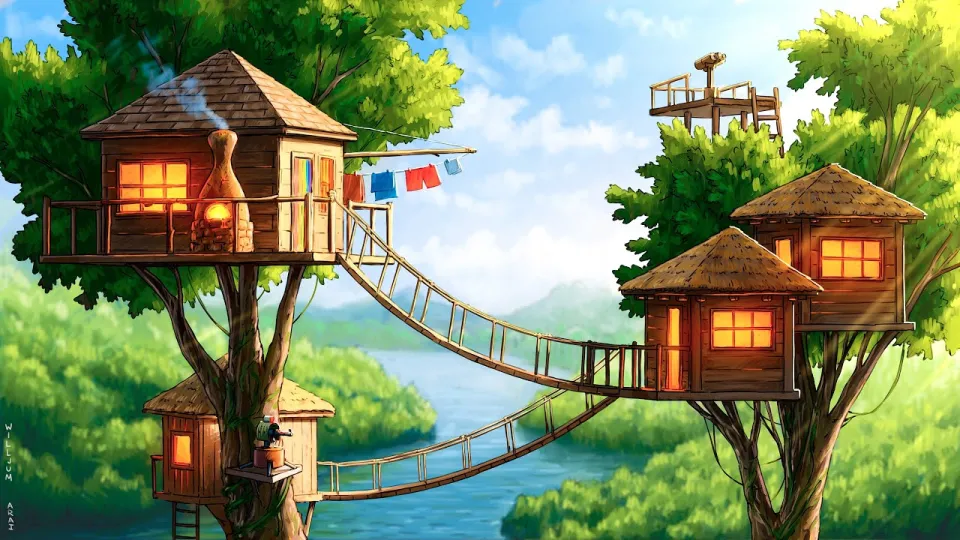
An anti raid sky settlement in Rust is a base built upward instead of outward: the loot sits several floors above the ground, the footprint stays small, and raiders have to burn rockets on vertical access rather than on cheap honeycomb. The idea is to make a solo wipe survivable by turning every raid into a long, expensive climb. Willjum's build follows that logic, and the same principles work for anyone planning a base on a vanilla or lightly modded server. If you want to see the full run, the channel's supporters get early access and bonus material through Willjum's Patreon page.
What an anti raid sky settlement in Rust actually is
A sky settlement is a base whose core is stacked high above the ground, usually on a small foundation footprint or a single tower, with the loot room at the top of the stack. The point is not to hide, but to make the raid path vertical and expensive. Raiders who expect a bunker with thick walls instead meet a narrow column that has to be climbed, breached floor by floor, and stabilised before they can even reach the good boxes.
In practice the design changes three things about a raid:
- The number of walls between the outside and the loot stays low, but the walls that exist are all in the raider's way.
- Explosive costs go into vertical access, and every floor above the breach point is another set of doors and ceilings.
- Time on target grows, which matters on populated servers where a raid attracts counter-raiders within minutes.
A ground-level base spreads its loot across rooms a raider can reach from several directions. A sky build concentrates it in one place and makes that place awkward to stand in, which is exactly the trade Willjum leans on.
Why height beats honeycomb for a solo base
Honeycomb is cheap to build and expensive to raid, but it is also predictable: experienced players know the standard shell counts and bring the right number of rockets. Height breaks that math because the raider has to solve a vertical problem before the loot math even starts. A tower with a small footprint offers fewer walls to blow in total, so each rocket buys less progress than it would against a wide base.
There is a second advantage that solo players feel immediately. A tall, narrow base is easier to defend from inside. You can hold a staircase, drop down a floor, and reset the fight, while a group pushing up a single column has nowhere to spread out. That is why the format shows up so often in solo survival content: it turns a numbers disadvantage into a geometry problem.
The cost is real, though. Sky bases are upkeep-hungry, and a design that looks efficient on paper can bankrupt a player who cannot farm daily.
Step by step: building the tower without losing stability
Stability is the part that kills most sky base attempts, so build in this order and check the game's stability indicator after every floor.
- Pick a flat, low-traffic spot with a clear line of sight in at least two directions, ideally near a monument you can farm but not on the main road to it.
- Lay the smallest foundation footprint you can live with, then raise a single support column and confirm the top of the planned tower still reads as stable.
- Build the loot floor first, not last. Place boxes, furnaces and your workbench where they will actually sit, then wall them in.
- Add decoy floors below with cheap doors and empty boxes so a raider who breaches low spends explosives on nothing.
- Keep the real entrance high and reachable only by a route you can remove, such as a ladder hatch or a jump-up you can seal behind you.
- Upgrade from wood to stone to metal from the top down, because the loot floor is the one that has to survive the first breach.
- Recheck upkeep weekly and keep a small stash of resources on a second character or a nearby stash so a bad wipe does not end the run.
If stability fails partway up, do not patch it with extra pillars in the middle of the loot floor; rebuild the support line instead. A tower that wobbles structurally usually collapses the moment a raider takes out one connection.
What the design costs and where it still fails
Every base has a counter, and the sky settlement's counter is preparation. A group with enough rockets, a ladder and patience can still reach the top; height buys time rather than immunity. The realistic goal is to make the raid expensive enough that most players pick a softer target, which is how solo players survive on busy servers.
The upkeep maths is the other weak point. Tall bases mean more building pieces, and more pieces mean a higher hourly cost that scales with every upgrade tier. On a vanilla server with a weekly wipe, a tower like this is comfortable for a player who farms a few hours a day and painful for one who logs in twice a week. Modded servers with boosted gather rates change that balance completely, which is why the same design can feel trivial on a 3x server and brutal on vanilla.
Common questions from players who never touched Rust
A large share of the audience for this kind of content has never installed the game, and their questions are the most useful ones for anyone judging whether the build is worth copying.
- Is the base actually unraidable? No. Nothing in Rust is. The sky settlement raises the price of a raid; it does not remove the possibility.
- Do you need a group to build it? No, but you need consistent farming time. The design is aimed at solo players who can log in regularly.
- Why not just build underground? Underground bases hide loot well but limit your escape routes and make the raid a straight tunnel fight. Height gives you vertical movement instead.
- Does it work on modded servers? It works best where upkeep is manageable, so boosted servers make it easier and vanilla makes it a commitment.
The recurring theme in viewer discussion is that the story matters as much as the build. People who have never played Rust still follow the wipe because the base is a character in it: it starts as a plan, gets tested, and either holds or falls.
Useful links
- Willjum on Patreon — support the channel and get access to bonus content.
- https://www.twitch.tv/willjum — live streams and the survival island servers.
- https://twitter.com/willjum1 — build updates and announcements.
- http://creativecommons.org/licenses/by/4.0/ — the licence covering the music used in the videos.
Final thoughts on the anti raid sky settlement
The anti raid sky settlement is less a secret trick and more a philosophy: spend your resources on making a raid slow instead of making it impossible. Height, a small footprint and a well-placed loot floor do more for a solo player than another layer of honeycomb, provided you can keep up with the upkeep. Copy the structure, not the exact block count, and adjust the tower to how often you actually play. Willjum's build is a good reference point for that experiment, and the channel's wipe stories show both the wins and the collapses that come with it. If the design saves your loot once, it has already paid for itself — and if you want more of these runs, the Patreon page is the place to start.
Questions & answers
Is an anti raid sky settlement in Rust really safer than a normal base?
It is safer against the average raider, not against a prepared group. Height forces explosives into vertical access and adds time, which discourages opportunistic raids. A team with enough rockets and patience will still get to the loot.
How much upkeep does a tall sky base need in Rust?
More than a compact ground base of the same tier, because every extra floor adds building pieces to the hourly cost. The exact figure depends on your footprint, upgrade tier and server settings, so check the tool cupboard before you commit to a height.
Can a solo player build one without a group?
Yes, but it demands regular farming. The design rewards players who log in daily and can replace resources after a raid. On boosted servers the upkeep burden drops sharply, which makes the build far more forgiving.
Why do people who never played Rust still watch these builds?
The appeal is the story of a wipe: a plan, a build, a raid and a result. The base acts as the main character, so viewers follow the tension even without knowing the crafting costs or the rocket maths.
Source: I Built an anti raid sky settlement in Rust... · Markdown version